

For this church:  |
Milton All Saints (Mausoleum)Archaeology
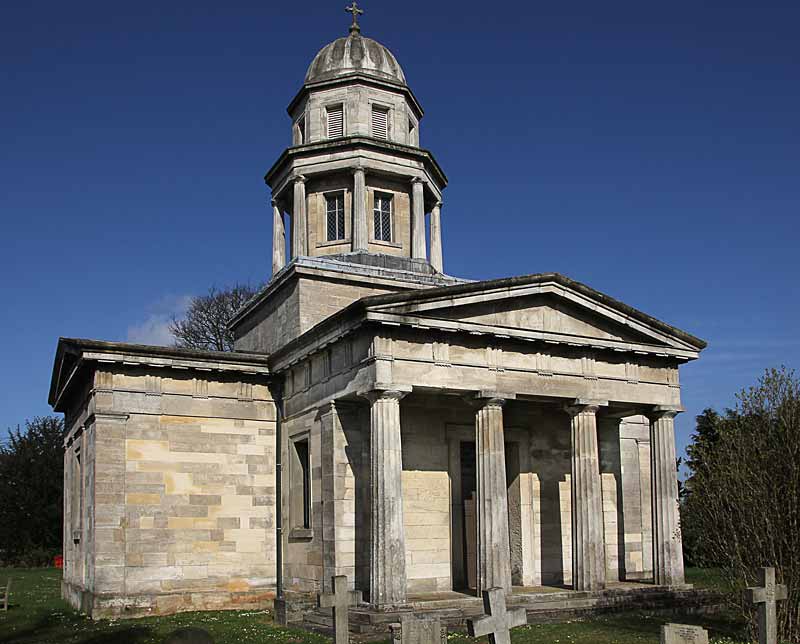
Designed in Greek Doric style by Sir Robert Smirke, architect of the British Museum, the building is, according to Pevsner (1979), ‘a clever combination of church and mausoleum.’ Excavation of the foundations started in May 1824 but although the Duke’s diary entries report reasonable progress with the building work over the next year (in June 1825 he observes that ‘it wants nothing but the dome’ and in November the workman were ‘fitting up the inside of Markham Church’) the mausoleum did not open until nine years later on 27 December 1833.
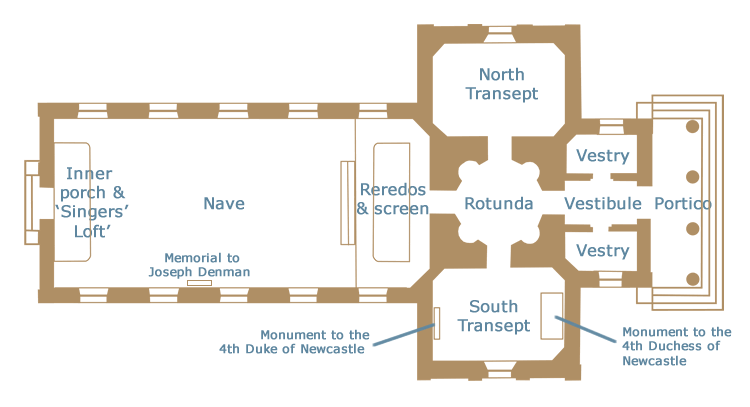
The mausoleum part of the building has as its entrance an impressive four-column pedimented portico at the east end. It leads to a vestibule (with vestries on the north and south) and beyond is the rotunda with tomb chambers in the form of transepts on the north and south. The tomb chambers were originally intended to hold the remains of the Dukes of Newcastle and their families but the 4th Duke decided that they would be used to accommodate monuments and the dead were laid to rest in ‘The Dormitory’ under the nave floor.
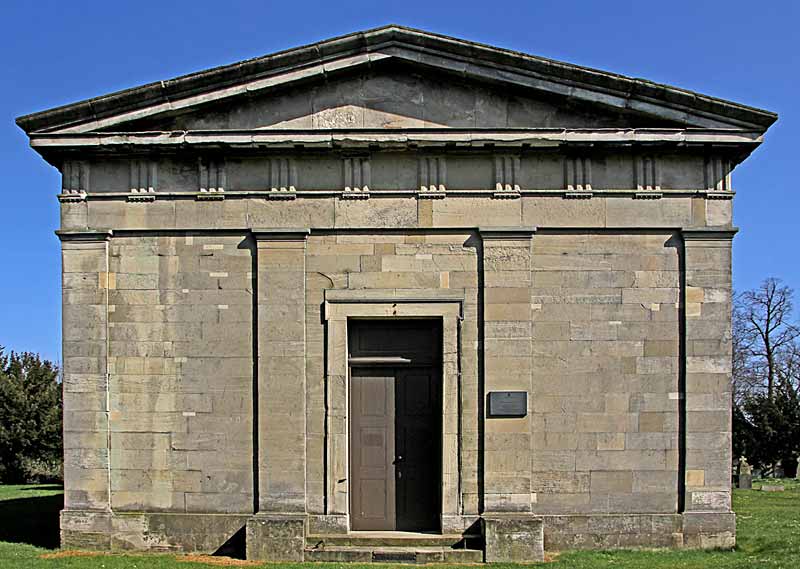
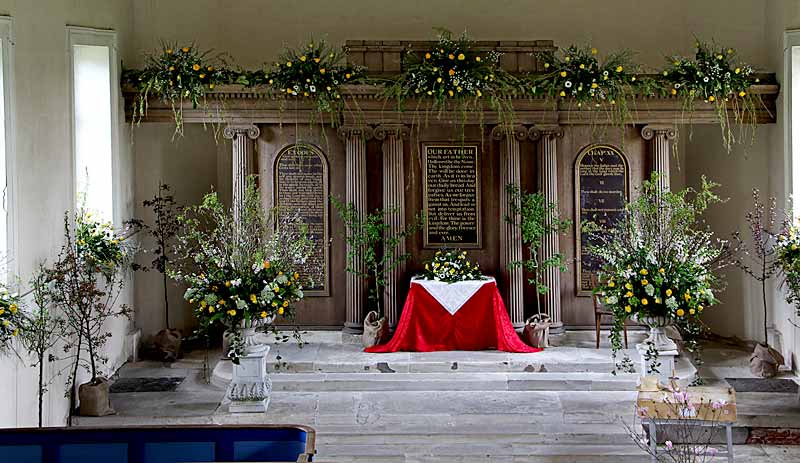
The nave was designed to be the new parish church and access to it was through a west door flanked by single pilasters. Inside the church is divided off from the mausoleum by an Ionic screen (reredos) at the east end of the nave with a door behind it that leads into the rotunda. There is also a ‘singer’s loft’ or gallery against the west wall, over the inner porch at the west door. There have been no significant additions or modifications to the building since 1833. |
Introduction | Location | History | Archaeology
Fittings | Glass | Organ | Bells | Clock | Stonework | Monuments | War Memorial | Churchyard
References | Pictures | Plans | Listing Description | List of Incumbents | Parish page
Project: Home | Index | About | People | What's new | Resources
 |  |  |  |